Tomas Kenilli
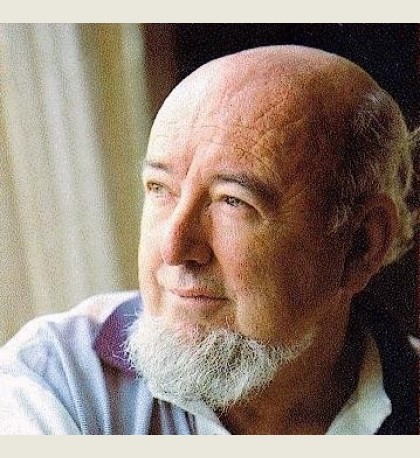
Thomas Keneally is an Australian prose writer and playwright. He was born on 7 October 1935 in Sydney. At the age of 17 he entered a Catholic seminary, but left it before ordination. The experience of those years is reflected in Keneally’s early novels, A Place at Whitton (1964) and Three Cheers for the Paraclete (1968). Keneally’s first major work, which led people to speak of him as a talented representative of the historical novel, was Bring Lurks and Heroes (1967). Racism and violence, two social problems to which the writer returns in many of his books, became the subject of artistic exploration in the highly acclaimed novel The Chant of Jimmie Blacksmith (1972). Keneally recreates an episode from the history of the Australian state of New South Wales, when an Aboriginal man, driven to fury by the way he is treated by whites, becomes a murderer. In 1973 the Royal Society of Literature awarded the author the Heinemann Prize. In Blood Red, Sister Rose: A Novel of the Maid of Orleans (1974), critics noted the well-developed image of Joan of Arc. In later books, war is presented from various angles: in Gossip from the Forest (1975), it is the reflections of a participant in the negotiations that led to the signing of the 1918 Armistice at Compiègne; in Season in Purgatory (1977), it is the work of a doctor in a guerrilla army; in Confederates (1979), it is the preparation for battle of soldiers during the American Civil War. The action of the novel Cut-Rate Kingdom (1980) takes place in 1942 in Canberra. Keneally’s most famous novel, Schindler’s List (1982), published in England under the title Schindler’s Ark, received the Booker Prize in 1993. Keneally is also the author of the novels The Survivor (1969), A Dutiful Daughter
Books

Didn't find the book you were looking for?
