Tove Ditlevsen
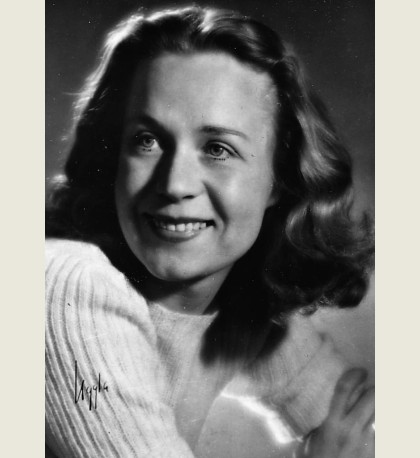
Tove Ditlevsen was a poet and one of Denmark’s most famous and distinctive writers.
She was born and raised in the working-class district of Vesterbro in Copenhagen. Her father was a stoker and had an interest in politics and literature, while her mother was a housewife. Tove was 7 years old when her father lost his job and the family began living on the edge of poverty. Her childhood experiences and perspective on the world became an important theme in her work.
She began her literary career as a poet; she wrote her first poems at the age of ten. At 14, she had to leave school and go to work as a governess. Her parents considered further education unnecessary for a girl.
Without ever receiving a full education, Tove made her debut at 20. In 1941, her debut novel, A Man Hindered a Child (“Man gjer et barn fortraed”), was published. It was well received by critics and publishers. From the very beginning, Ditlevsen’s work stood out sharply from that of her contemporaries. She wrote with uncompromising honesty, unafraid to speak about her life experience and the everyday realities of Danish women in the mid-20th century. She often addressed sharp and in serious literature generally unaccepted “women’s” themes.
Although Ditlevsen was often described as a “literary outsider,” she was by no means lacking in recognition. Her books were published by Gyldendal, Copenhagen’s leading literary publishing house. In total, Ditlevsen published about 30 books, including novels, short stories, essays, poetry, children’s books, and autobiographies. In 1986, a film, Street of My Childhood, was also released, based on the writer’s stories about childhood in Copenhagen.
She was married four times. She died by suicide in 1976, after taking a lethal dose of sleeping pills.
Books

Didn't find the book you were looking for?
