Uorton Edit
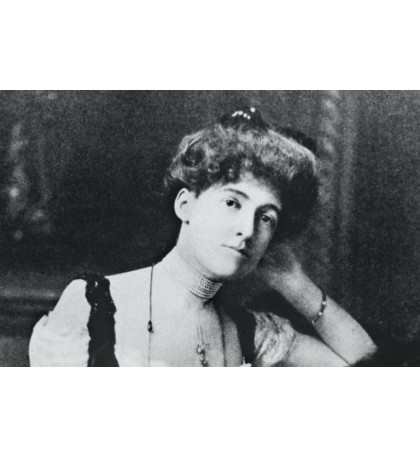
(I) Wharton (Wharton), Edith (24 I 1861, New York — 11 VIII 1937, Saint-Brice-sous-Forêt, near Paris) — prose writer, poet. She was born into an old aristocratic family: Wharton’s ancestors are mentioned by V. Irving. She received an excellent home education; she spent her childhood and youth in Europe, coming to the United States with her family only occasionally. She knew many European writers; the greatest influence on her work was exerted by H. James, with whom she maintained friendly relations for many years. During the First World War Wharton donated a considerable sum to save the children of Belgian refugees; for aid to the front she was awarded the Cross of the Legion of Honour.
Wharton’s first stories were published in 1891, and in 1899 her first book appeared, a collection of novellas entitled The Greater Inclination. Wharton is the author of about 20 novels, several poetry collections, and more than a dozen collections of short stories. Her first novel was The Valley of Decision (1902). Wharton herself called it a “romantic chronicle.” The action takes place in Italy in the 18th century. The hero of the novel, the Italian aristocrat Odo Valsecca, is engaged in philosophy; he is not alien to the ideas of the French Revolution, but by the end of the novel, embittered after the death of his beloved (who is killed by a mob accused of witchcraft), he turns into a tyrant. This novel still bears traces of apprenticeship and immaturity.
Wharton’s best works were written in 1900–1920: The House of Mirth (1905), The Fruit of the Tree (1907), Ethan Frome (1911), The Custom of the Country (1913), The Age of Innocence (1920, Pulitzer Prize), and others.
The House of Mirth is Wharton’s first major independent work. At the center of the narrative is the story of Lily Bart, a beautiful aristocrat who has no money to live as the customs of “society” demand. She leads a life “on the verge of splendor and poverty,” becomes a companion to wealthy ladies, almost becomes the kept woman of a
Books
Didn't find the book you were looking for?
