Valera Khuan
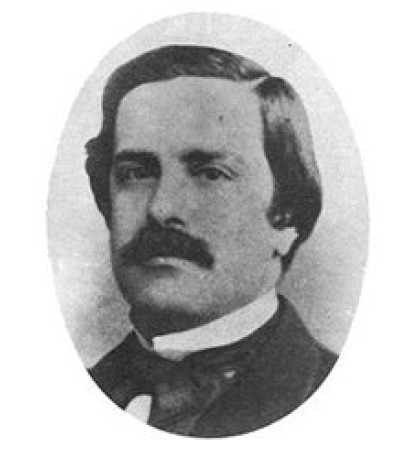
Juan Valera y Alcalá-Galiano was a Spanish prose writer. A bearer of an old noble family name, he was born in the south of the country, in the province of Córdoba, and from boyhood began to show an inclination toward literature. As a student in the law faculty of the University of Madrid, he preferred to study what interested him most: languages, literature, and the arts. In 1847 he entered the diplomatic service. Living alternately in European capitals and overseas, he sent detailed letters home from everywhere. These messages to friends from Naples and St. Petersburg, Frankfurt and Lisbon, Rio de Janeiro and Washington became for him a school of writing. Along with articles on philosophical, historical, and religious themes, with literary studies and literary-critical works, they later made up a significant part of the writer’s creative legacy. In the 1870s his novels began to appear one after another: Pepita Jiménez, Illusions of Doctor Faustino, Morsamor, Commander Mendoza, Doña Luz—whose heroes were usually Andalusians, people from his childhood. In these novels the writer often touched on the theme of religious fanaticism, real or imagined, актуал for those times; however, he was interested primarily not in social or ideological problems, but in the psychological qualities of human beings, whom he often regarded with a smile or irony. A man of classical tastes, simultaneously receptive to both the unknown and the new, an Andalusian and a cosmopolitan, an intellectual who valued life above ideas, Valera came to rank among the greatest Spanish prose writers of the nineteenth century.
Books

Didn't find the book you were looking for?
