Vasil Bykov
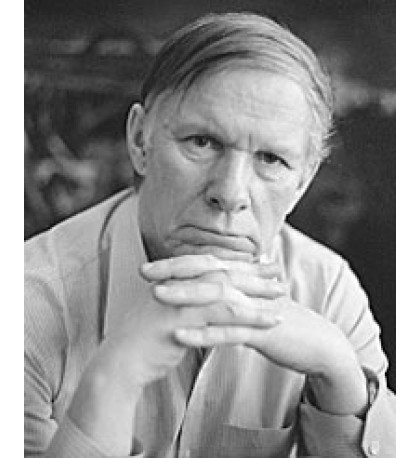
Vasil Vladimirovich Bykov was born on 19 June 1924 in the village of Bychki, Ushachsky District, Vitebsk Region, into a peasant family. From childhood he was interested in drawing. He graduated from 8 classes of school in the village of Kublichi, then studied in the sculpture department of the Vitebsk Art College (1939–1940) and at a factory training school (until May 1941). In June 1941 he passed the examinations for the 10th grade externally.
The war found him in Ukraine, where he took part in defensive works. During the retreat, in Belgorod, he fell behind his column and was arrested and nearly shot as a German spy. He fought in an army engineering battalion. In the winter of 1941–1942 he lived at Saltykovka station and in the town of Atkarsk, Saratov Region, and studied at a railway school.
Called up to the army in the summer of 1942, he graduated from the Saratov Infantry School. In the autumn of 1943 he was given the rank of junior lieutenant. He took part in the battles for Krivoy Rog, Alexandria, and Znamenka. During the Kirovograd operation he was wounded in the leg and stomach (he was mistakenly listed as killed); the events after the wound became the basis for the novella It Is Not Painful for the Dead. At the beginning of 1944 he spent three months in hospital. He then took part in the Iași–Chișinău operation and the liberation of Romania. With the active army he passed through Bulgaria, Hungary, Yugoslavia, and Austria; he was a senior lieutenant, commander of a platoon in regimental, then army artillery. In the memoir book The Long Road Home (2003), he recalled the war as follows:
“ I anticipate the sacramental question about fear: was I afraid? Of course I was afraid, and perhaps at times I even panicked. But there are many kinds of fear in war, and they are all different. Fear of the Germans — that they might take me prisoner, shoot me; fear because of fire, especially artillery fire or bombings.
Books



Didn't find the book you were looking for?
