Vladimir Gilyarovskiy
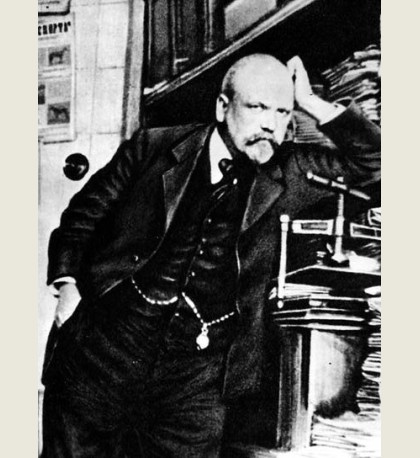
He was born on a forest farmstead in the Vologda Governorate. In 1860, Gilyarovsky’s father obtained a clerk’s post in Vologda. Gilyarovsky’s father served in the police (as a district police officer). In August 1865, Gilyarovsky entered the first class of the Vologda Gymnasium and was held back in that very first year. At the gymnasium, Vladimir Alekseyevich began writing poems and epigrams about the teachers (“mischief against the instructors”), and translated poems from French. During his studies at the gymnasium, he spent two years learning circus arts: acrobatics, trick riding, etc. He associated with exiled Narodniks. One of the exiles gave Gilyarovsky Nikolai Chernyshevsky’s book What Is to Be Done?
In June 1871, after failing an exam, Gilyarovsky ran away from home without a passport or money. In Yaroslavl he found work as a barge hauler: for 20 days he walked with a harness along the Volga from Kostroma to Rybinsk. Then in Yaroslavl he worked as a hooker in the port. In the autumn of that same year he entered military service as a volunteer in the Nezhin Regiment. In 1873 he was sent to the Moscow Junker School, where he studied for about a month, after which he was dismissed back to the regiment for violating discipline. However, he did not continue his service and submitted a resignation report. He later worked as a stoker, at the bleaching plant of merchant Sorokin in Yaroslavl, as a fireman, in fishery operations, in Tsaritsyn he hired on as a horse herder, and in Rostov-on-Don he became a rider in a circus. In 1875 he began working as an actor in the theater. He performed on the stages of Tambov, Voronezh, Penza, Ryazan, Saratov, Morshansk, Kirсанov, and others. With the outbreak of the Russo-Turkish War he again joined the army as a volunteer, serving in the Caucasus in the 161st Alexandropol Regiment in the 12th company; later he transferred to the hunting detachment and was awarded the Badge of the Military Order
Books

Didn't find the book you were looking for?
