Vladimir Mayakovsky
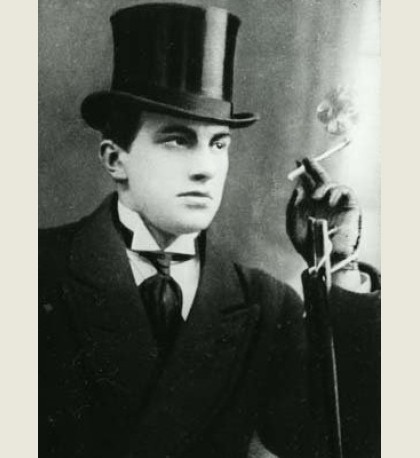
Vladimir Vladimirovich Mayakovsky was a Russian Soviet poet. One of the greatest poets of the 20th century. Besides poetry, he also stood out as a playwright, screenwriter, film director, actor, artist, and editor of the journals LEF (“Left Front”) and Novy LEF.
He was born in the Georgian village of Baghdadi, in the family of Vladimir Konstantinovich Mayakovsky (1857–1906), who served as a forester of the third rank in the Erivan Governorate and, from 1889, in the Baghdadi forestry district. The poet’s mother, Aleksandra Alexeyevna Pavlenko (1867–1954), from a Kuban Cossack family, was born in the Kuban, in the stanitsa of Ternovskaya. In the 1924 poem Vladikavkaz — Tiflis, Mayakovsky calls himself a “Georgian.” His paternal grandmother, Efrosinya Osipovna Danilevskaya, was a cousin of the author of historical novels G. P. Danilevsky and was of Zaporizhian Cossack origin. The future poet had two sisters, Lyudmila and Olga, and two brothers: Konstantin (who died at the age of three from scarlet fever) and Aleksandr (who died in infancy).
In 1902, Mayakovsky entered a gymnasium in Kutaisi. Like his parents, he spoke Georgian fluently. He took part in a revolutionary demonstration and read propaganda pamphlets. In February 1906, his father died of sepsis after pricking his finger with a needle while sewing papers together. From then on, Mayakovsky could not stand pins and hairpins, and his bacteriophobia remained with him for life.
In July of that same year, Mayakovsky moved with his mother and sisters to Moscow, where he entered the 4th grade of the 5th classical gymnasium (now Moscow School No. 91 on Povarskaya Street; the building has not survived), where he studied in the same class as B. L. Pasternak’s brother Shura. The family lived in poverty.
Books


Didn't find the book you were looking for?
