Yuri Lotman
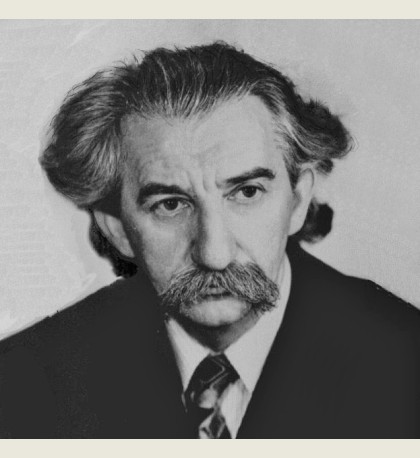
Yury Mikhailovich Lotman was a Soviet literary scholar, cultural historian, and semiotician.
Sister — .
Yury Lotman was born in Petrograd. He studied at Petrishule from 1930 to 1939, then at Leningrad University. He was called up for military service in 1940. He took part in the Great Patriotic War.
After graduating from university in 1950 and until the end of his life, he worked in Tartu because of the more liberal atmosphere in Estonia’s academic circles; he was a professor at the University of Tartu.
In March 1951 he married , a literary scholar and specialist in the study of the work of A. A. Blok and Russian Symbolism, and a professor at the University of Tartu. Son — .
Yury Mikhailovich Lotman was one of the founders of the Tartu–Moscow semiotic school. He was a corresponding member of the British Academy (1977), a member of the Norwegian Academy of Science and Letters (1987), an academician of the Royal Swedish Academy of Sciences (1989), and a member of the Estonian Academy of Sciences.
In the late 1980s he created a series of educational television programs, “Conversations on Russian Culture.”
During perestroika he took part in the political life of Estonia. In October 1988 he was elected to the council of authorized representatives of the Estonian Popular Front. He supported a law on the national language and opposed Intermovement, the Memory society, and Stalinism.
In 1993 Yury Lotman was awarded the A. S. Pushkin Academic Prize with the wording: for the works “Alexander Sergeyevich Pushkin. Biography of the Writer” and “Alexander S. Pushkin’s Novel Eugene Onegin. Commentary.”
He died in Tartu on 28 October of the same year and was buried in Raadi Cemetery.
According to his student and secretary Tatyana
Books


Didn't find the book you were looking for?
