Zhorzhi Amadu
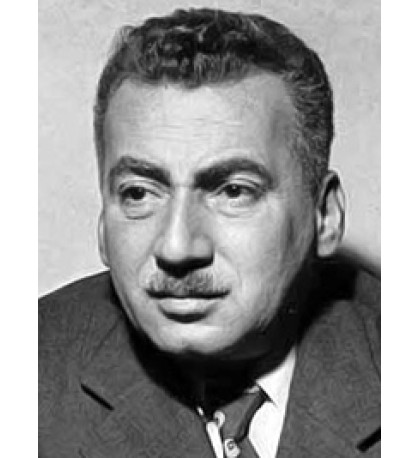
Jorge Leal Amado de Faria was a famous Brazilian writer, public and political figure. Academician of the Brazilian Academy of Arts and Letters (1961, chair No. 23 of 40).
He was born in 1912 on the Auricídia fazenda in the state of Bahia. A year later, because of a smallpox epidemic, his family was forced to move to the city of Ilhéus, where Amado spent his entire childhood, and the impressions of this period influenced his later creative work. He studied at the University of Rio de Janeiro in the law faculty, where he first encountered the communist movement. He was active in the Communist Party of Brazil. In 1946 he was elected deputy to the National Congress; two years later, after the banning of the Communist Party, he was exiled again. Over the following four years he traveled through a number of countries in Western and Eastern Europe, Asia, and Africa, and met Picasso, Éluard, Neruda, and other prominent cultural figures. He was persecuted for political activity. He was elected deputy to the National Congress from the Communist Party of Brazil (1946). In 1948–1952 he lived in France and Czechoslovakia. He visited the USSR repeatedly. Member of the World Peace Council. He was awarded the International Stalin Prize “For Strengthening Peace Among Peoples” (1951) and numerous other international and Brazilian prizes. Member of the Brazilian Academy of Literature. Honorary doctor of various universities in Brazil, Portugal, Italy, Israel, and France, holder of many other titles in virtually every country in South America, including the title of Obá de Xangô in the Candomblé religion.
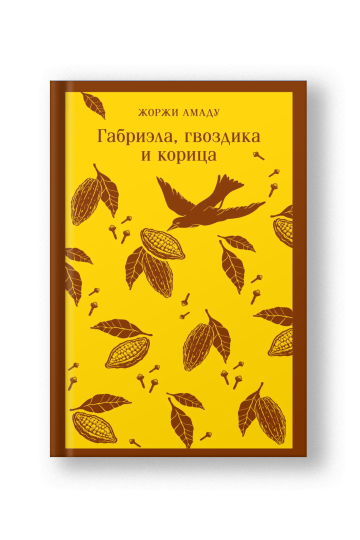
After returning to his homeland in 1952, he devoted himself entirely to literary work, becoming a singer of his native Bahia, with its tropical exoticism and distinctly African presence in its culture. His novels are marked by an interest in folk traditions and magical ritual, and by a zest for life in all its joys. Ideological attitudes in his work give way to purely artistic criteria, operating within that distinctly Latin American current which criticism has called “magical realism.” This change was initiated by the novel Terras do sem fim (1942), followed by other novels in the same vein — Gabriela, Cravo e Canela (1958
Books
Didn't find the book you were looking for?
