Zigmund Freyd
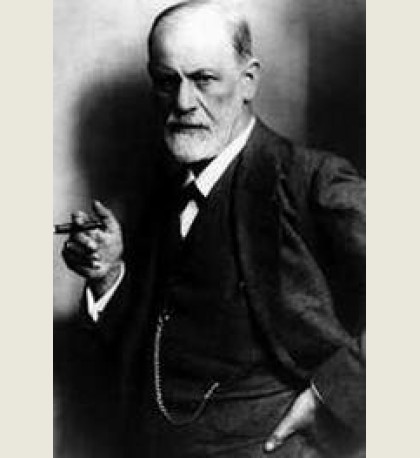
Sigmund Freud was an Austrian psychologist, psychoanalyst, psychiatrist, and neurologist. He is known as the founder of psychoanalysis, which had a significant influence on psychology, medicine, sociology, anthropology, literature, and the arts of the twentieth century.
Sigismund Schlomo Freud was born on 6 May 1856 in Freiberg, into the family of fabric merchant Jacob Freud. When Sigmund was three years old, the family moved to Vienna. After finishing school, Sigmund entered the University of Vienna. He chose a medical career.
In 1881, Freud received his medical degree. Freud opened a private practice as a neurologist. In 1885, he applied for and received the position of Privatdozent in neurology.
The first of Freud’s publications on neuroanatomy dealt with the roots of the neuronal connections of the auditory nerve (1885). He then published a research paper on sensory nerves and the cerebellum (1886), followed by another article on the auditory nerve (1886). Freud’s work in neurology ran parallel to his first experiments as a psychopathologist in the fields of hysteria and hypnotism.
In 1895, Freud developed the method of free association. Freud asked his patients to abandon control over their thoughts and say whatever came to mind. Over time, free association led the patient to forgotten events, which were then relived emotionally. Since the response occurs in full consciousness, the conscious “I” is able to cope with the emotions, gradually “cutting a path through subconscious conflicts.” Freud called this process “psychoanalysis,” using the term for the first time in 1896.
By reconstructing the hidden meaning of a dream—its latent content—Freud discovered a special language of subconscious mental processes. He published his findings in The Interpretation of Dreams in 1900. After further observations of patients, a new work, Three Essays on the Theory of Sexuality, was published in 1905. His conclusions about the sexual nature of human beings became known as the “libido theory,” and this theory, together with the discovery of infant sexuality, was one of the main reasons Freud was rejected by his professional colleagues and the general public.
His claim that the neurotic ailments
Books



Didn't find the book you were looking for?
