Thousands of depictions of the Gospel scene of the Three Wise Men bringing gifts to the newborn Jesus have survived from the Middle Ages. Among the ivory reliefs, book miniatures, mosaics, frescoes, altar panels, and stained glass windows, one image stands out and has long intrigued historians: Hieronymus Bosch's triptych 'Adoration of the Magi.' It is filled with iconographic 'anomalies.' Who is the bearded man standing in the doorway of the hut? His red cloak is draped over his naked body, his head is wrapped in a turban entwined with thorns, and his ankle is encased in a glass vessel, through which a bleeding wound is visible. Why are sirens and fish devouring each other depicted on the robes of the black Magi and his servant?
In the West, the three 'kings' who came to Bethlehem were revered as saints, and these details ill-fit with righteousness. To decipher Bosch's message, medievalist historian Mikhail Maizuls turns to medieval demonology, anti-Jewish polemics, astrological theories, and apocalyptic myths about the end times and the Antichrist.


Alpina
Between Christ and Antichrist: Hieronymus Bosch's “The Adoration of the Magi' (Mezhdu Khristom i Antikhristom)
£52.64
Description
Specification
Meet The Author

Mikhail Mayzuls
Mikhail Romanovich Maisuls is a Russian historian specializing in the Middle Ages.
He graduated from the Russian-French Center for Historical Anthropology named after Marc Bloch at RSUH (2004), the French University College at Moscow State University (2004), and the School for Advanced Studies in the Social Sciences (EHESS) in Paris (2005; DEA diploma in medieval history), as well as the postgraduate program at RSUH (2008).
From 2007 to 2014, he taught at the Center for Mediaeval Studies of RSUH, where he gave courses entitled “Trends in the Development of the Humanities in the 20th and Early 21…

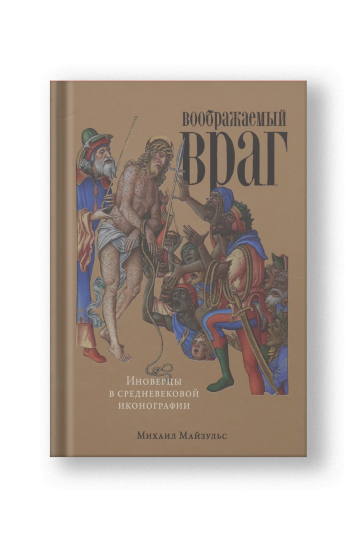
Mikhail Mayzuls
The Imaginary Enemy: Infidels and Heretics in Medieval Iconography (Voobrazhaemy Vrag)
£52.64
Rozali Gilbert
The Very Secret Sex Lives of Medieval Women: An Inside Look at Women and Sex in Medieval Times (Intimnoye Srednevekovye)
£45.62
Miranda Aldhouse-Green
The Celtic Myths: A Guide to the Ancient Gods and Legends (Keltskie Mify)
£29.24


Readers Review
Leave a ReviewBe the first!
Leave a Review
There are no reviews for this book yet — be the first to share your thoughts! Your opinion matters greatly to us and fellow readers.