Boris Zhitkov
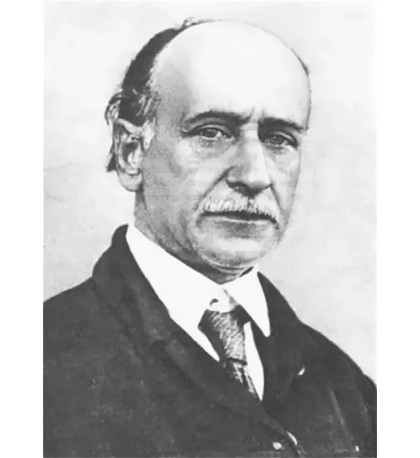
Boris Stepanovich Zhitkov was a Russian and Soviet writer, prose writer, traveler, and explorer.
Boris Zhitkov was born in Novgorod in 1882, on August 30, into an educated family. The future writer’s mother, Tatyana Pavlovna, was a pianist; she studied with Anton Grigoryevich Rubinstein himself. His father, Stepan Vasilyevich, taught mathematics at the Novgorod Teachers’ Seminary and wrote textbooks. Three of his brothers were naval officers. Two of them were heroes of the defense of Sevastopol, and all three retired with the rank of admiral. A fourth brother, a naval engineer, built lighthouses on the Black Sea; a fifth drowned while still young during a training voyage around the world.
Three-year-old Boris once disappeared without a trace. The boy was found on the Trade Side. He had wanted to buy a steamboat with a kopeck he had prudently taken from home.
Zhitkov senior had come to Novgorod, in a sense, into exile in 1878, after being expelled from two higher educational institutions for participation in the revolutionary student movement. Political exiles often lived in their house until they found work. In the villages around Novgorod, Stepan Vasilyevich created libraries for peasants. For the summer they moved to the countryside.
From 1890 the family lived in Odessa: Stepan Zhitkov entered the service of the Russian Society of Shipping and Trade. Their home was considered a center of urban culture. University teachers, musicians, scholars, ordinary port employees, and sailors gathered at the hospitable host’s house. Zhitkov’s parents and his elder sisters prepared sailors’ children for gymnasium free of charge: the father taught the exact sciences, the mother foreign languages, and the sisters Russian literature. From childhood Boris Zhitkov played the violin, knew entire scenes from Woe from Wit, chapters from Eugene Onegin, and poems by Lermontov by heart, and learned rowing and swimming in the port together with gymnasium students who would certainly have had no chance of an education if not for his family. He became an excellent carpenter, sailor, hunter, and even trained animals. The tame wolf from the story of the same name is no invention: it
Books

Didn't find the book you were looking for?
