de Unamuno Migel
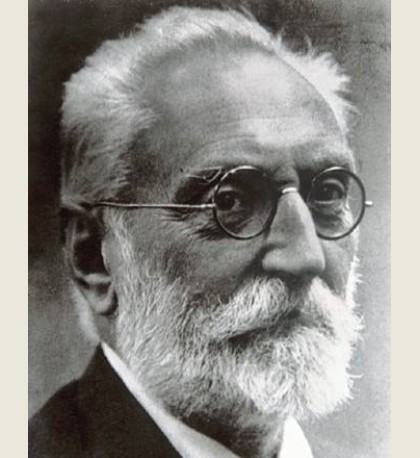
Miguel de Unamuno was a Spanish philosopher, writer, public figure, and one of the leading figures of the “Generation of ’98.”
He was born into a merchant’s family and was Basque by nationality; his native language was Basque, but he wrote in Spanish. He received a traditional Catholic upbringing in the family and for some time even wanted to become a priest. In 1880, Unamuno entered the Faculty of Philosophy and Humanities at the University of Madrid, from which he graduated in 1884 with a doctorate. Unamuno returned to his native Bilbao, where he taught Latin in secondary schools. In 1891 he married Carmen Lizárraga, with whom he lived a long and happy life and raised eight children. That same year he moved to Salamanca, where he obtained a professorship in Greek, classical literature, and philosophy at the University of Salamanca, and in 1901 became its rector. In 1924, for his speeches against Primo de Rivera’s dictatorship, Unamuno was exiled to the Canary Islands, from where he went into voluntary exile in France. He returned to his homeland in 1930 and was a deputy in the Cortes (1931–1932). Unamuno spoke out against the republic, believing that it could not ensure civil peace and national unity. After supporting the Francoist uprising in its first weeks, in October 1936 he came out in decisive condemnation of it, for which he was removed from the post of university rector and effectively placed under house arrest. On the eve of his death, he wrote: “I know nothing more repugnant than that union of barracks spirit with church spirit that cements the new power.”
Books
Didn't find the book you were looking for?
