Illies Florian

Florian Illies is a German writer and art historian, journalist, and art critic.
Illies’s father, Joachim, was a biologist and limnologist (a specialist in the study of lakes). Florian studied art history and contemporary history at the universities of Bonn and Oxford. In Bonn, he completed his studies in 1998 with a Master of Arts degree, with a thesis on Gustav Friedrich Waagen.
He worked as an editor for culture at German newspapers such as Frankfurter Allgemeine Zeitung and Die Zeit.
He is married to Amélie von Heydebreck, daughter of Deutsche Bank executive Tessen von Heydebreck. They have two children.
In 2004, together with his wife, he founded the art, literature, and lifestyle magazine Monopol.
In 2011, he became one of the four partners of the Berlin auction house Villa Grisebach, where he is responsible for 19th-century art, broadening the auction house’s focus, which had specialized in classical modernism.
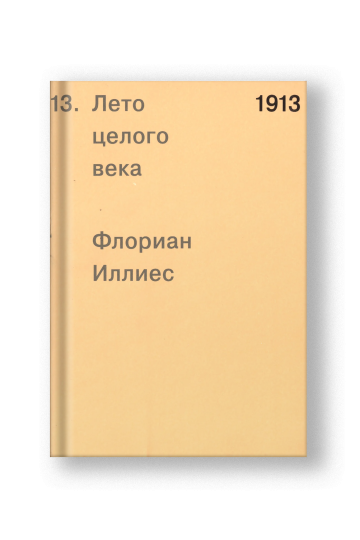
He is best known for his books Generation Golf (2000), a critical look at the contemporary generation; his later books further developed this image. His book 1913: The Summer of the Century has also been translated into 20 languages.
In German: Already in 1997 he became a feuilleton editor at Frankfurter Allgemeine Zeitung. Since 1999 he was responsible for the FAZ’s “Berlin pages” and subsequently became head of the feuilleton section of Frankfurter Allgemeine Sonntagszeitung. After leaving FAZ, Illies founded Monopol in 2004 with his wife Amélie von Heydebreck, daughter of Deutsche Bank board member Tessen von Heydebreck, with whom he has two children; Monopol is a magazine for art, literature, and lifestyle. Until the end of 2006, Illies was both its publisher and editor-in-chief. In 2007, former Welt am Sonntag culture editor Cornelius Tittel took over as editor-in-chief, while Illies and his wife remained publishers. In 2008, Illies moved to Die Zeit and initially worked for Zeit-Magazin.[1] From 2009, together with Jens Jessen, he headed the feuilleton
Books
Didn't find the book you were looking for?
