Pavel Bazhov
During the Civil War he fought on the side of the Reds; since July 1919, he was sent to Ust-Kamenogorsk (Kazakhstan) to restore the Bolshevik cell of Ust-Kamenogorsk Prison, which had been destroyed during the failed uprising of the prisoners. Under the guise of an insurance agent, he maintained communication between the partisan formations of the “Red Mountain Eagles.”
After the liberation of Ust-Kamenogorsk from the White Guards, Bazhov became a central figure in the city’s activities. He became the editor and, in essence, also the organizer, production manager, and typesetter of the newspaper. At the same time, he was charged with “maintaining overall supervision of the work of the Department of Public Education.” He created teachers’ courses, organized schools for the elimination of illiteracy, and took part in the restoration of the Ridder mine. In July 1920, 87 teachers trained with his participation were sent to Kazakh volosts. On August 10, 1920, under the leadership of P. P. Bazhov and N. G. Kalashnikov, the First District Congress of Soviets was held in the city.
In May 1921, owing to a serious illness and at the request of the Kamyshlov Executive Committee, P. P. Bazhov returned to his homeland in the Urals, to Kamyshlov. There he continued his journalistic and literary work, wrote books on the history of the Urals, and collected folklore records. His first book of sketches, Ural Stories, was published in 1924.
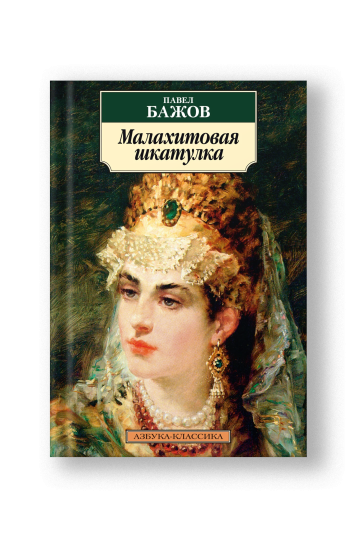
In 1936, the first of his Ural tales, “The Girl from the Azov Mountain,” was published in a magazine, and in 1939 the first edition of his U
Books


Didn't find the book you were looking for?
