Sergei Yesenin
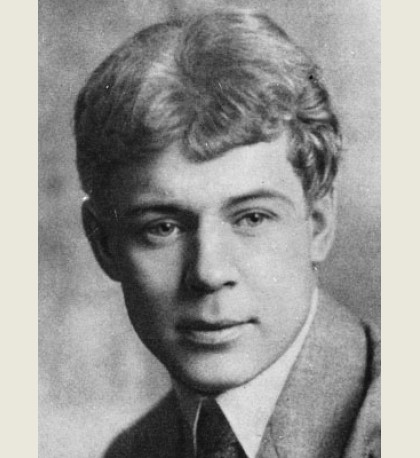
SERGEI ALEKSANDROVICH YESENIN was a Russian poet, a representative of Neo-Peasant poetry and lyric verse, and in the later period of his work, of Imagism. Sergei Alexandrovich Yesenin was born on September 20 (October 3), 1895, in the village of Konstantinovo, Ryazan Governorate, into the family of a peasant, Alexander Yesenin. The future poet’s mother, Tatyana Titova, had been married against her will, and soon left with her three-year-old son to live with her parents. She then went to Ryazan to earn a living, while Yesenin remained in the care of his grandmother and grandfather (Fyodor Titov), an expert on church books. Yesenin’s grandmother knew many songs, fairy tales, and ditties, and, by the poet’s own admission, it was she who provided the “impulses” for his first poems.
In 1904 Yesenin was sent to study at the Konstantinovo zemstvo school, and then to the church teachers’ school in the town of Spas-Klepiki.
In 1910–1912 Yesenin wrote quite a lot, and among the poems of these years there are already fully formed, accomplished works. Yesenin’s first collection, Radunitsa, was published in 1916. The song-like quality of the poems included in the book, their naively sincere intonations, and the melody that recalls folk songs and ditties, testify that the umbilical cord linking the poet with the village world of his childhood was still very strong at the time they were written.
The title of the book, Radunitsa, is often associated with the song-like quality of Yesenin’s poetry. On the one hand, Radunitsa is a day of commemoration for the dead; on the other, the word is associated with a cycle of spring folk songs long called radovitsky or radonitsky vesnyanki. In essence, one does not contradict the other, at least in Yesenin’s poems, whose distinguishing feature is hidden sadness and aching pity for everything living, beautiful, and doomed to disappear: “Blessed forever be that which came to bloom and die...” Even in the poet’s early poems, poetic language
Books


Didn't find the book you were looking for?
