Victor Hugo
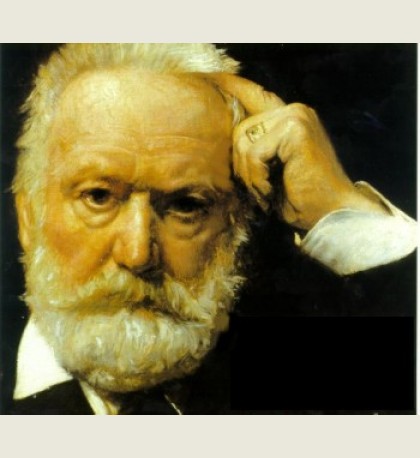
Victor Marie Hugo was a French writer (poet, novelist, and playwright), the leader and theoretician of French Romanticism. He was a member of the French Academy (1841) and the National Assembly (1848).
The writer’s father was Joseph Léopold Sigisbert Hugo (1773–1828), a general in Napoleon’s army, and his mother was Sophie Trébuchet (1772–1821), the daughter of a shipowner and a royalist-Voltairean.
Hugo spent his early childhood in Marseille, on Corsica, on Elba (1803–1805), in Italy (1807), and in Madrid (1811), where his father was performing his official duties, after which the family returned to Paris each time. These travels left a deep impression on the future poet’s soul and prepared his Romantic worldview. Hugo himself later said that Spain was for him “a magical spring whose waters intoxicated him forever.” In 1813, Hugo’s mother, who was having an affair with General Lahorie, separated from her husband and settled in Paris with her son.
In October 1822, Hugo married Adèle Foucher; five children were born in this marriage: Léopold (1823–1823), Léopoldine (1824–1843), Charles (1826–1871), François-Victor (1828–1873), and Adèle (1830–1915).
Victor Hugo’s first mature work in the genre of fiction was written in 1829 and reflected the writer’s acute social conscience, which continued in his later works. The novella Le Dernier jour d’un condamné (The Last Day of a Condemned Man) had a great influence on writers such as Albert Camus, Charles Dickens, and Fyodor M. Dostoevsky.
Claude Gueux, a short documentary story about a real-life murderer executed in France, was published in 1834 and was later regarded by Hugo himself as a prelude to his magnificent work on social injustice, Les Misérables.
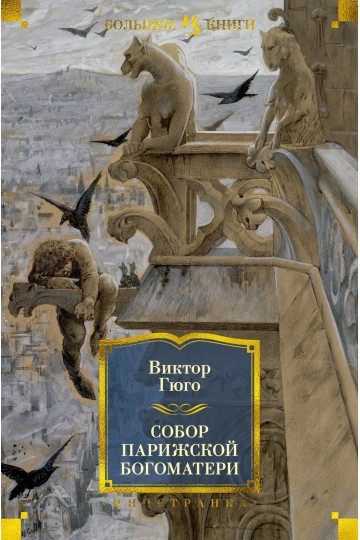
But Hugo’s first full-fledged novel was the extraordinarily successful Notre-Dame de Paris (The Hunchback of Notre-Dame), published in 183
Books

Didn't find the book you were looking for?
