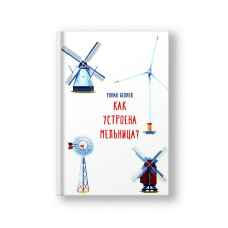
'How Does a Mill Work?' is a continuation of Roman Belyaev's popular book series about lighthouses, bridges, and now mills.
The mill is one of the most useful and fascinating mechanisms known to man since ancient times. It symbolizes the struggle against the elements, transforming the power of water and wind into the energy so vital to humanity. Mills have become symbols of progress at various stages of history. Mills may seem like romantic images of the past, but they are no less necessary today — it is thanks to their modern counterparts that the sustainable, environmentally friendly energy that the planet needs is developing.
5 reasons to buy the book 'How Does a Mill Work?':
- The long-awaited continuation of Roman Belyaev's series about structures that were not only technically necessary, but also became symbols of our culture;
- The book will tell you about the different types of mills, when they appeared, what energies they convert into motion or other energies, and what raw materials they can process;
- The book is not only about the design of structures and technological processes, but also about the energy itself that mills work with, its types and nature, as well as the present and future of energy;
- The invention of mills freed man from mechanical work, sped up the process dozens of times and made it possible to process large volumes - the book will tell you what significance mills had in the history of civilizations;
- The book 'How Does a Mill Work?' with its recognizable author's style, colorful illustrations, and captivating narrative is in no way inferior to the first two books in the series about lighthouses and bridges, which received international awards and were translated into six languages.
Author: Roman Belyaev