Ernest Miller Kheminguey
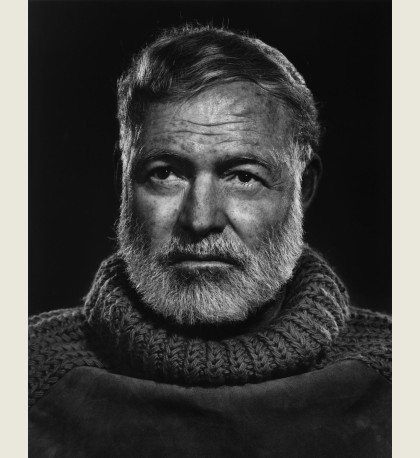
Ernest Miller Hemingway was an American writer and journalist, winner of the 1954 Nobel Prize in Literature and the 1953 Pulitzer Prize. He was born on July 21, 1899, in the privileged Chicago suburb of Oak Park, Illinois, USA. His father, Clarence Edmonds Hemingway, was a doctor, and his mother, Grace Hall, devoted her life to raising children.
From early childhood, his father tried to instill in Ernest a love of nature, hoping that he would follow in his footsteps and take up medicine and natural science. When Ernie was 3 years old, Clarence Hemingway gave him his first fishing rod and took him fishing. By the age of 8, the future writer already knew by heart the names of all the trees, flowers, birds, fish, and animals that lived in the Midwest. Another of Ernest’s favorite pursuits was literature. The boy spent hours reading books he could find in the family library, and he especially liked the works of Darwin and historical literature.
Mrs. Hemingway dreamed of a different future for her son. She made him sing in the church choir and play the cello. Many years later, already an elderly man, Ernest would say:
My mother kept me out of school for a whole year so that I could study music. She thought I had talent, but I had no talent at all.
Nevertheless, resistance to this was suppressed by his mother—Hemingway had to practice music every day.
In addition to the winter home in Oak Park, the family had a cottage called Windmere on Lake Walloon. Every summer Hemingway, with his parents, brothers, and sisters, went to these quiet places. For the boy, trips to Windmere meant complete freedom. No one forced him to play the cello, and he could do as he pleased—sit on the shore with a fishing rod, roam the woods, play with children from the Indian village. In 1911, when Ernest turned 12, Hemingway’s grandfather gave him a single-shot 20-gauge shotgun. This gift strengthened the friendship between grandfather and grandson. The boy loved listening to the old man’s stories and retained warm memories of him for the rest of his life, often bringing them into his later works.
Hunting became Ernest’s chief passion. Clarence taught his
Books



Didn't find the book you were looking for?
