Theodore Dreiser
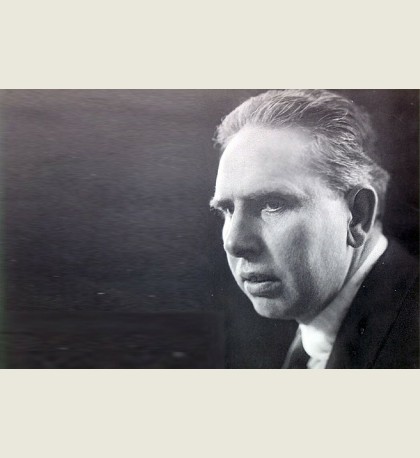
Theodore Dreiser was an American writer and public figure.
Dreiser’s parents—John Dreiser (Johann Paul Dreiser, a German who emigrated to the United States in 1846) and Sarah Schöneb—were co-owners of a wool-spinning mill. After a fire destroyed the wool stocks, his father worked on a construction site, where he was severely maimed. Soon afterward, three older sons died. The family moved frequently for a long time and eventually settled in the provincial town of Terre Haute, Indiana. Theodore Dreiser, the ninth child in the family, was born on August 27, 1871. He graduated from school in 1887. In 1889 he entered Indiana University in Bloomington. A year later he discontinued his studies because he could not afford tuition. Afterward he worked as a clerk and as a wagon driver for a laundry.
From 1892 to 1894 he was a reporter for newspapers in Pittsburgh, Toledo, Chicago, and St. Louis. In 1894 he moved to New York. His brother Paul Dresser organized the music magazine Every Month, and Dreiser began working there as an editor. In 1897 he left the magazine. He wrote commissioned pieces for Metropolitan, Harper's, and Cosmopolitan.
One of the first literary works published by Dreiser was the essay “The Artistic Quarter of New York: A Literary and Artistic Refuge in Broxville” (November 1897). Before the appearance of his first novel in 1900, Dreiser published 42 articles and a number of poems. In an interview for the reference book Who's Who in America (1899), Dreiser stated that he had written two books: “A Study of Celebrated Contemporaries”—essays on Wilhelm II, Barnum, etc.—and “Poems.”
Usually Dreiser’s bibliography begins with his novel Sister Carrie (1900). With this work, Dreiser continued the realist traditions of American writers of the late 19th century, but already under conditions of the decline of this movement. The novel was met by criticism and society with extreme hostility as an “immoral” work. Free from prejudice and the puritanism common at the time, Dreiser created a realistic portrayal of a girl who defies accepted moral views. Only in
Books




Didn't find the book you were looking for?
