Vladimir Sorokin
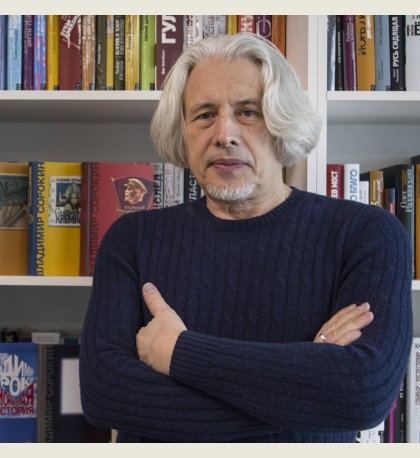
Vladimir Georgievich Sorokin is a Russian writer, screenwriter, playwright, and artist. He is one of the most prominent representatives of conceptualism and соц-арт in Russian literature. He is the author of novels, as well as a number of novellas, short stories, plays, and film scripts.
Vladimir Georgievich was born on 7 August 1955 in Bykovo, near Moscow. He studied at the Gubkin Moscow Institute of Oil and Gas Industry and the Moscow Institute of Inorganic Chemistry. After receiving a higher education degree as a mechanical engineer, Sorokin worked for a year at the magazine Smena, from which he was dismissed for refusing to join the Komsomol. He worked in book graphics, painting, and conceptual art. He has participated in many art exhibitions. He designed and illustrated about 50 books. Sorokin’s first literary experiments date from the early 1970s: in 1972 he made his debut as a poet in the large-circulation newspaper Za kadry neftyanikov. As a writer, he formed among the artists and writers of the Moscow underground of the 1980s.
In 1985, a selection of six of Sorokin’s short stories was published in the Paris magazine A-Ya. In the same year, the novel The Queue was published by Sintaksis (France).
Vladimir Sorokin is a leading representative of conceptualism and соц-арт in prose genres. Discussions around his works reach a high degree of intensity and have wide public resonance. A variety of literary styles are used in his short stories and novels. In Soviet times he was close to the Moscow conceptualist circle and was published in samizdat (in particular, in Mitya’s Journal). His first official publication in the USSR dates from 1989, when the Riga magazine Rodnik placed several of the writer’s short stories in its November issue. Shortly afterward, Sorokin’s stories appeared in Russian magazines and anthologies such as Third Modernization, Iskusstvo Kino, End of the Century, and Bulletin of New Literature.
The emergence of postmodernism in Russia, within the framework of which Sorokin’s work developed in the 1980s and 1990s, was a reaction to the impact of the Soviet ideological system
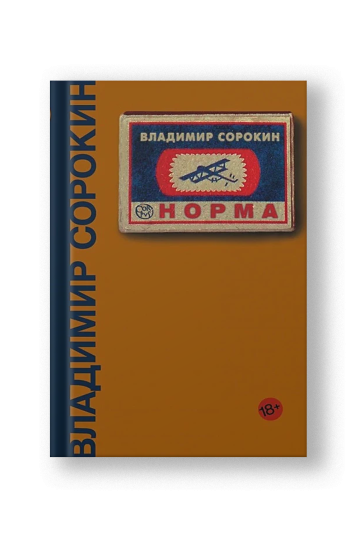
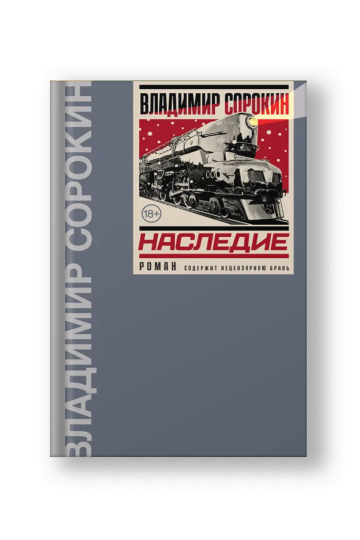
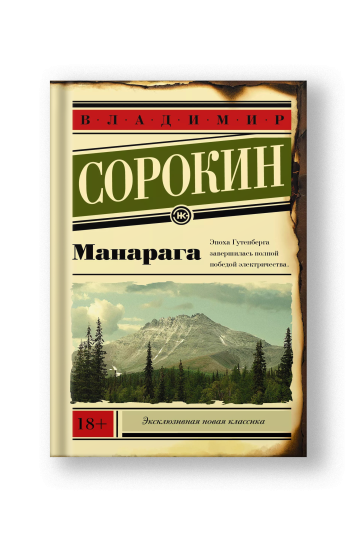
Books





Didn't find the book you were looking for?
