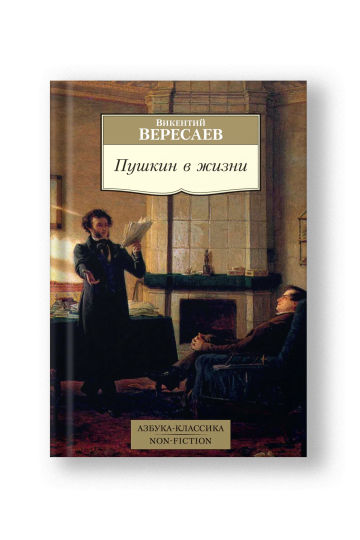

Vikenty Veresaev is a remarkable Russian writer, translator, and literary scholar. He is known not only for his fiction but also for his literary studies and translations of Hellenic poets. One of his most famous books, 'Pushkin in Life,' is subtitled 'A Systematic Collection of Authentic Evidence.'
V.V. Veresaev essentially discovered a new genre—the chronicle biography. Using montage techniques, he constructed a narrative from documentary materials: memoirs, letters, notes, and statements by people who knew the poet—relatives, friends, and social acquaintances. As a result, Veresaev managed to create a text free of authorial commentary and judgment, and from authentic testimonies of his contemporaries, a remarkably vivid and coherent image of Pushkin was formed.
The first publication of this book (1926–1927) provoked heated controversy in the press: the 'living' Pushkin presented by Veresaev did not fit into ideological standards. Nevertheless, the book proved highly sought after: it was reprinted numerous times and remains relevant to this day, almost a hundred years after its publication.