F. Scott Fitzgerald
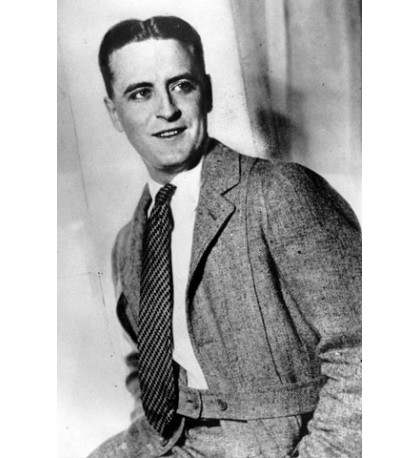
Francis Scott Fitzgerald was an American writer known for his novels and short stories depicting the so-called American “Jazz Age” of the 1920s.
He was born on September 24, 1896, in St. Paul, Minnesota, into a prosperous Irish Catholic family. He was named after his great-great-grandfather, Francis Scott Key (1779–1843), the author of the lyrics to the U.S. national anthem, “The Star-Spangled Banner.” However, his family’s wealth came not from his father but from his mother’s family, née McQuillan. Thanks to his relatives, Fitzgerald was able to study at prestigious educational institutions: from 1908 to 1910 at St. Paul Academy, from 1911 to 1913 at Newman School, and from 1913 to 1917 at Princeton University.
At Princeton, he played on the university football team and wrote stories and plays that won university competitions. Nevertheless, in 1917, shortly before final examinations, Fitzgerald voluntarily enlisted in the army, though he never took part in combat.
In 1919, Fitzgerald was demobilized and worked for some time as an advertising agent in New York. While still in the army, he met Zelda Sayre, who came from a wealthy and respected family (she was the daughter of an Alabama state judge) and was considered the state’s foremost beauty and most desirable bride. His later biography and all of his work are associated with her.
Despite their engagement, Fitzgerald and Sayre did not marry immediately, since Sayre’s family was opposed to the marriage, as Fitzgerald did not at the time have a good job or a steady income. Apparently, the desire to marry Zelda is what drove Fitzgerald to seek success in literature, since only success would enable him to count on her family’s favor. For this reason, he set about revising his manuscript, The Romantic Egotist, which he had not yet managed to publish, as it had already been returned to him by publishers a couple of times.
This novel appeared in March 1920 under the title This Side of Paradise and instantly brought Fitzgerald success. A month after its publication, he married Zelda, who served as the prototype for the novel’s heroine, Rosalind. The
Books



Didn't find the book you were looking for?
